How to Tell If Your Pool Is Leaking

Chris Oswalt

President of Probuilt Renovations

8 min read
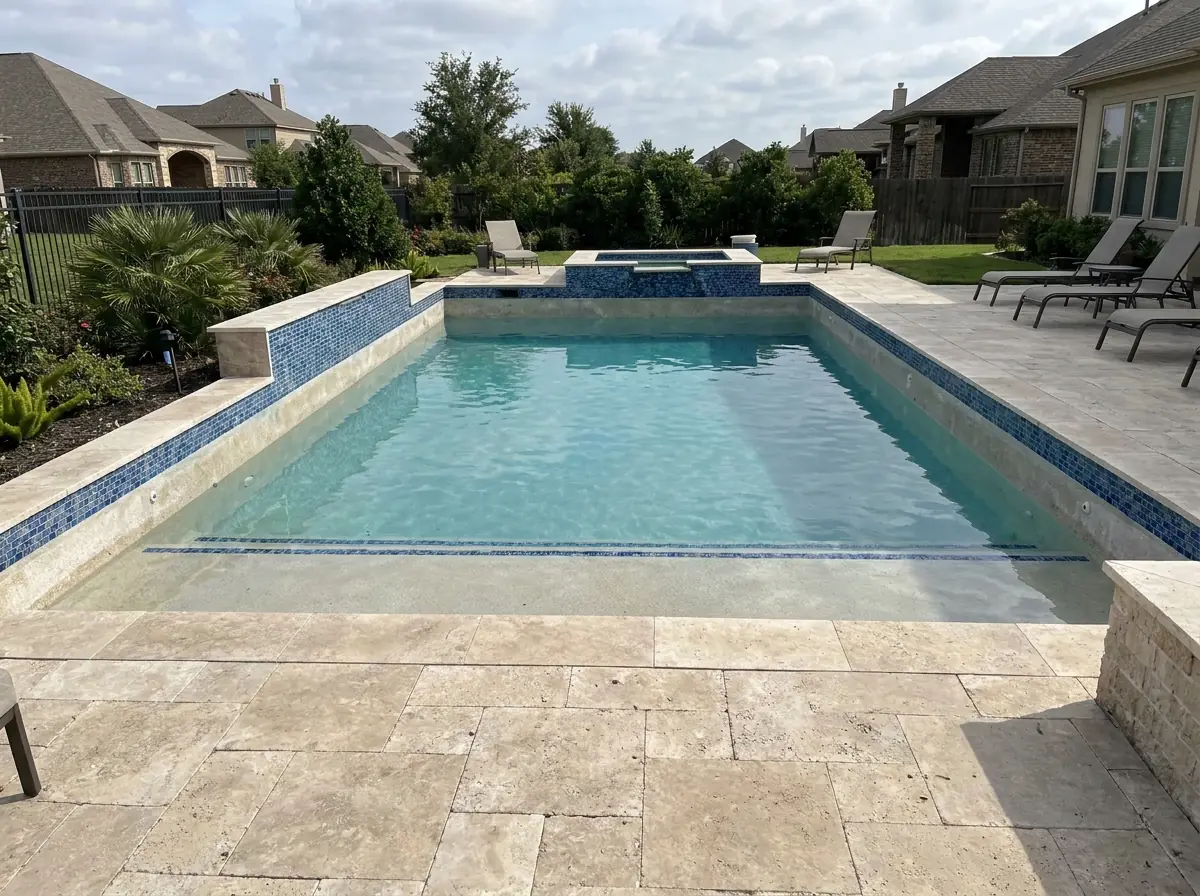
A residential inground pool with the water line sitting slightly low against the tile and coping in an upscale Kansas City backyard, daylight.

Every pool loses a little water to evaporation and normal use, so a dropping water line is not automatically a leak. The fastest at-home way to tell is the bucket test: fill a clean bucket about two-thirds full with pool water, mark the water line inside the bucket and the pool's water line on the outside, set the bucket on a pool step so both are exposed to the same sun and wind, leave the pump running normally, and check back in about 24 hours. If the pool dropped noticeably more than the bucket, you likely have a leak. Beyond the water line itself, watch for soggy or unusually green spots in the yard near the pool or equipment pad, an autofill that seems to run constantly, and visible cracks in the shell or around fittings.

Before you assume the worst, let me walk you through how to check it yourself. A lot of the time the answer turns out to be evaporation, splash-out, or a swimmer carrying water out on their towel, not a leak at all. And when it is a real leak, finding it early is what keeps a manageable repair from turning into a much bigger one.

Below I will walk through the signs to look for, the bucket test step by step, and what to do if it points to a real leak. No jargon, no pressure. Just a practical way to know where you stand.

First: Is It Even a Leak?

Every pool loses some water, and most of it has nothing to do with a leak. Evaporation is real, especially during the kind of hot, dry, windy stretches we get in Kansas City in July and August. Splash-out from swimmers, water on towels and suits, and routine backwashing all add up too. On a rough week you might notice the water line dropping and jump straight to "I have a crack in my pool," when the real answer is that it has just been busy and sunny. So before anything else, let's give it a fair test to find out which one you're actually dealing with.

The Signs Your Pool Might Actually Be Leaking

Before you set up a bucket test, it helps to scan for the symptoms I look for first. Any one of these on its own is worth noting; a couple of them together is a stronger signal that the water loss is not just evaporation.
A damp soggy patch of turf near a pool equipment pad, a common sign that water may be escaping underground.

Persistently soggy turf or an unusually green patch near the pool or equipment pad can mean water is escaping underground rather than evaporating.

  • The water line is dropping faster than usual, or your autofill is running constantly to keep up.
  • You have wet, soggy, or unusually green spots in the yard near the pool or equipment pad that do not dry out the way the rest of the lawn does.
  • The autofill or equipment is running far more than it used to, the equipment pad is wet when it should be dry, or you notice air in the system.
  • There are visible cracks in the shell, the plaster or finish, or around fittings, skimmers, returns, and lights. Cracks are a common leak path, and they are also worth getting looked at for structural reasons.
  • You are constantly adding water and re-balancing your chemistry. Fresh water dilutes what you have already dosed, and the constant uphill battle is itself a sign that something is off.

The Bucket Test, Step by Step

The bucket test is the simplest at-home way to separate a real leak from normal water loss. It is not a proprietary method and you do not need any special equipment. All you need is a clean bucket, a marker or tape, and about 24 hours. Here is exactly how to run it.
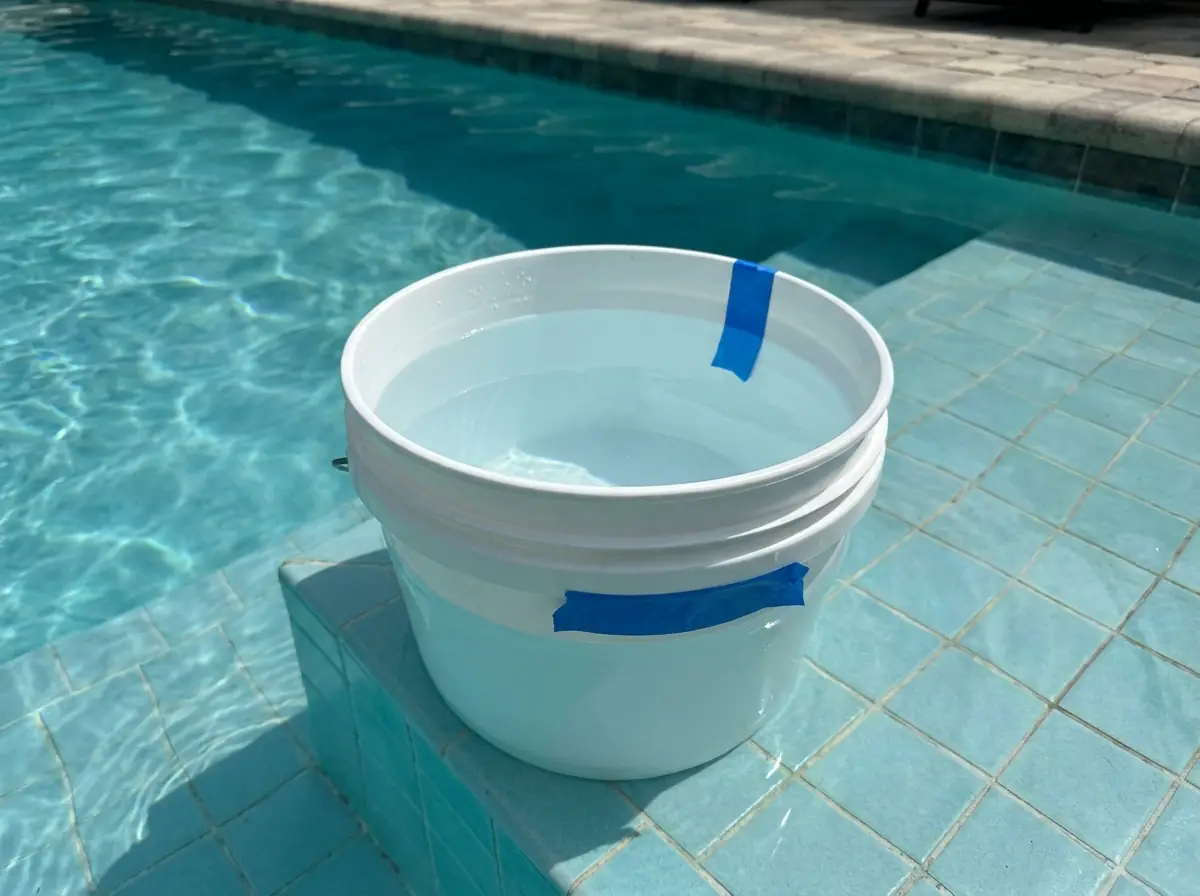
A bucket with a marked water line sitting on a pool step, demonstrating how to set up the bucket test for checking pool water loss.

Set the bucket on a pool step so it sits in the same sun, wind, and temperature as the pool. Mark both water lines and wait about 24 hours before comparing.

  • Fill a clean bucket about two-thirds full with pool water.
  • Set the bucket on a pool step so it sits in the same sun, wind, and temperature as the pool. Submerge it just enough to stay stable, but keep the water inside the bucket above the pool's water line so you have a clear comparison.
  • Mark the water line inside the bucket and the pool's water line on the outside of the bucket. A piece of tape or a grease pencil both work well.
  • Leave the pump running normally and wait about 24 hours. Try not to swim or run water features during the test, since added activity changes the result.
  • Compare the two lines when you come back. If both dropped about the same amount, that is evaporation and is normal. If the pool dropped noticeably more than the bucket, you likely have a leak.

If you are not sure after one test, run it again over a couple of days for a clearer picture. You can also try a variation: run the bucket test once with the pump on, then repeat with the pump off for 24 hours. If the pool loses more water with the pump running, the leak can point toward the pressure side of the system. More loss with the pump off can point toward the shell or liner. That split is a useful hint, but it is not a guaranteed diagnosis, and it will not tell you exactly where the water is going.

What to Do If the Bucket Test Points to a Leak

The bucket test tells you that you have a leak. It does not tell you where. That is where a professional comes in, because pinpointing the exact location is a job for the right equipment, not more guesswork. If your check points to a real loss, the efficient next step is to have someone find it and fix it before it gets bigger. There are two common paths depending on what your pool is made of. A cracked or aging gunite or fiberglass shell may call for crack repair followed by resurfacing (our pool leak detection and crack repair service covers that from start to finish). A failing, torn, or wrinkled vinyl liner often means a liner replacement is the right fix rather than a patch. If you are also seeing rough spots, staining, or a surface that just looks tired alongside the water loss, the signs your pool needs resurfacing post covers what to watch for on that front.

When to Stop Testing and Just Get It Looked At

If the bucket test keeps showing a real drop over a couple of days, or you have visible cracks or a yard that stays soggy no matter the weather, you have done the homework. At that point the productive move is to stop chasing it yourself and have someone pinpoint exactly where the water is going. We can find the leak, repair the crack, and resurface or replace the liner if that turns out to be the real problem, all from one local team rather than coordinating between separate contractors. Give us a call at (816) 786-3893 or use the link below to tell us what you are seeing.

Key Takeaways

The short version

  • Every pool loses a little water to evaporation and normal use, so a dropping water line is not automatically a leak.
  • The fastest at-home check is the bucket test: set a filled bucket on a pool step, mark both water lines, wait about 24 hours with the pump running normally, and compare. If the pool dropped noticeably more than the bucket, you likely have a leak.
  • Watch for these signs alongside the water line: water dropping faster than usual, soggy or unusually green spots in the yard, an autofill or equipment running more than it used to, and visible cracks in the shell or around fittings.
  • The bucket test tells you that you have a leak, not where it is. If it confirms one, the next step is to have a pro pinpoint the location so it can be properly repaired.
  • Locally, Probuilt Renovations can find the leak, repair the crack, and resurface or replace the liner if that is the real issue, all handled by one team from start to finish.

Frequently Asked Questions

Common questions answered

How do I know if my pool is leaking?

Every pool loses a little water to evaporation, so the fastest way to tell if something more is going on is the bucket test: place a water-filled bucket on a pool step, mark the water line inside the bucket and the pool's line outside it, wait about 24 hours with the pump running normally, and compare. If the pool dropped noticeably more than the bucket, you likely have a leak. I also look for soggy or unusually green spots in the yard near the pool or equipment pad, an autofill that runs far more than it used to, and visible cracks in the shell or around fittings.

How does the bucket test work?

Fill a clean bucket about two-thirds full with pool water and set it on a pool step so it sits in the same sun, wind, and temperature as the pool. Mark the water line inside the bucket and the pool's water line on the outside of the bucket using tape or a grease pencil. Leave the pump running normally and wait about 24 hours without swimming or running water features. Then compare: if both lines dropped about the same amount, that is normal evaporation. If the pool dropped noticeably more than the bucket, you likely have a leak.

Is my pool leaking or is it just evaporation?

Honest answer: some water loss is completely normal, especially during the hot, dry, windy summer stretches we get in Kansas City. A dropping line by itself is not a sure sign of a leak. The bucket test is what actually separates normal evaporation (where the bucket and pool drop about the same amount) from a real leak (where the pool drops noticeably more than the bucket). Run the test before you assume the worst.

How much water loss is normal for a pool?

Pools normally lose some water to evaporation and use, but how much varies with heat, wind, sun exposure, and how often the pool is used. Rather than chase a specific number, I find the most practical approach is to compare your pool directly against a bucket sitting in the same conditions using the bucket test. That comparison gives you a meaningful baseline instead of trying to match a fixed figure that may not reflect your pool's specific situation.

What are the signs of a pool leak?

The signs I look for first are: water dropping faster than usual or the autofill running constantly; soggy or unusually green spots in the yard near the pool or equipment pad; an equipment pad that is wet when it should be dry, or air in the system; visible cracks in the shell, plaster or finish, or around fittings, skimmers, returns, and lights; and constantly adding water and chemicals because fresh water keeps diluting what you already dosed. Any one of these is worth tracking, and a couple together is a stronger signal.

My pool is leaking. What do I do next?

The bucket test tells you that you have a leak, not where it is. The next move is to have it pinpointed so it can be properly repaired. We handle that from detection through repair and can resurface the shell or replace the liner if that turns out to be the underlying issue. You can learn more about what professional leak detection and crack repair involves on our pool leak detection and crack repair service page, or call us directly at (816) 786-3893 to describe what you are seeing.

If your bucket test points to a leak, we can find it and fix it.

Tell us what you are seeing and we will take a look, no pressure. We find the leak, repair the crack, and resurface or replace the liner if that is the real issue, all from one local team.

We are based in Riverside, MO. Most leak inquiries start with a quick call to (816) 786-3893.